
Residential soil stabilization from TX ProChem eliminates foundation risks from expansive clay before construction begins. The company has applied commercial-grade chemical treatment to lock clay soil permanently in place. Residential soil stabilization prevents shifting that causes more Texas home damage than floods and storms combined.
Why Does Texas Clay Destroy New Foundations?
Texas clay soil damages more homes than floods, tornadoes, and earthquakes combined. The culprit is a relentless cycle of expansion and contraction that tears foundations apart from below.
Expansive clay behaves like a sponge. When moisture saturates the ground, clay particles swell with tremendous force. When drought follows, the same soil shrinks and cracks. This constant movement creates voids beneath slabs and exerts uneven pressure on foundation walls. Over time, the stress fractures concrete, warps framing, and leaves homeowners facing structural repairs that could have been prevented before the first brick was laid.
What Makes Texas Clay So Destructive?
The mineral composition of Texas clay gives it extraordinary shrink swell potential. High-plasticity clays, common across the state, change volume dramatically between wet and dry states. A single season of heavy rain or extreme drought shifts the earth enough to crack a custom gunite pool shell. The same forces act on home foundations, driveways, and underground utilities.
Residential soil stabilization addresses this threat at the molecular level. Rather than fighting the symptoms after cracks appear, builders who invest in home builder soil prep neutralize the clay’s ability to absorb water before construction begins.
How Does Unstable Soil Affect Construction Timelines?
Unstable soil conditions in clay-heavy regions lead to significant foundation problems over time. Soil that shifts, expands, or contracts causes cracking, settling, and long-term damage. For developers, this means callbacks, warranty claims, and reputational harm. Lot ready soil treatment eliminates these risks by chemically altering the soil’s polarity, rendering it incapable of absorbing excess moisture.
TX ProChem applies a permanent, science-backed fix that locks expansive clay in place. Builders who stabilize clay lots before pouring foundations avoid the delays and costs associated with reactive repairs. The company’s ionic liquid treatment stops the swelling and shrinking cycle for good, ensuring that new homes stay level through every drought and rainy season. For a deeper look at why traditional moisture maintenance fails, the real fix for foundation problems lies in subsurface treatment rather than surface-level watering strategies.
What Is Residential Soil Stabilization?
Residential soil stabilization is the process of enhancing soil’s physical properties to improve load-bearing capacity, durability, and moisture resistance beneath home foundations. This engineering intervention permanently alters expansive clay at the molecular level, preventing the shrink-swell cycle that damages structures.
TX ProChem delivers a permanent, science-backed fix for unstable building lots. The company assesses specific soil conditions on each site and applies a treatment that locks expansive clay in place permanently. No guesswork. No temporary solutions. The result is a chemically inert soil mass that refuses to absorb water or shift with seasonal moisture changes.
How Does Chemical Soil Stabilization Work?
The process targets the root cause of foundation movement. Expansive clay soils contain negatively charged particles that attract and hold water molecules. When moisture enters, the soil swells. When drought hits, it shrinks. This cycle repeats endlessly.
TX ProChem’s ProChem Ionic Liquid Stabilizer interrupts that cycle. The patented solution, validated through a two-year study conducted by the University of Texas at Arlington, alters the polarity of clay particles. Once treated, the soil becomes physically incapable of absorbing excess water. Swelling stops. Shrinking stops. The ground beneath the foundation remains dimensionally stable regardless of rainfall or drought conditions.
What Makes This Different From Traditional Soil Prep?
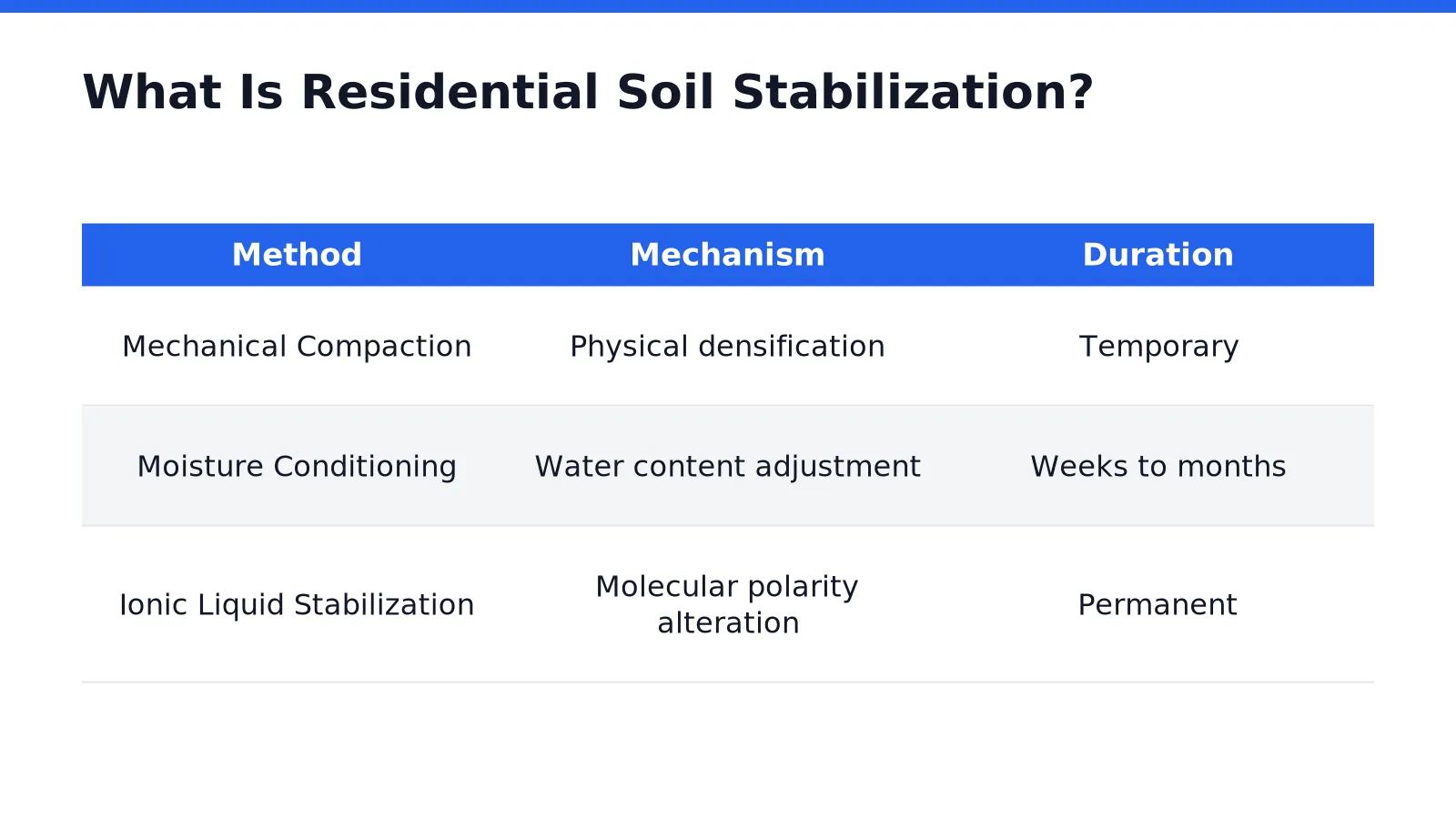
Standard home builder soil prep often relies on mechanical compaction or moisture conditioning. Those methods provide temporary results. Chemical stabilization delivers permanence.
The ionic treatment penetrates deep into the soil profile, treating the entire active zone where moisture fluctuations occur. Builders receive lot ready soil treatment that eliminates future callbacks for foundation cracks, sticking doors, or uneven floors.
Why Do Texas Builders Need Shrink-Swell Prevention?
Texas clay ranks among the most volatile in the country. A single season of heavy rain followed by drought shifts the earth enough to crack slab foundations. Shrink swell prevention stops this damage before it starts. TX ProChem’s residential soil stabilization process neutralizes the clay’s water affinity, creating a stable substrate that protects the structure for its entire service life.
For developers managing entire subdivisions, the company deploys heavy equipment capable of treating up to 6,000 square feet per day per tractor. This capacity keeps project schedules intact while delivering stabilize clay lots results that require no re-treatment. The treated soil stays stable. The foundation stays sound. The builder’s reputation stays protected.
How Does Shrink Swell Prevention Work?
Shrink swell prevention neutralizes expansive clay at the molecular level. The process permanently alters the soil’s electrochemical properties so it cannot absorb water.
TX ProChem’s approach targets the root cause of clay instability. Expansive clay particles carry a natural negative charge that attracts water molecules. This attraction drives the destructive cycle of swelling when wet and shrinking during dry periods. A University of Texas at Arlington study verified that the ProChemical Soil Stabilizer changes the polarity of clay soils by removing their negative charge. Electron microscopy confirmed this fundamental transformation.
What Happens to Clay Soil During Treatment?
The ionic liquid treatment renders treated soil physically incapable of absorbing excess water. Once the negative charge is neutralized, water molecules have no electrochemical reason to bond with clay particles. The soil becomes inert.
This is not a temporary coating or a moisture barrier. It is a permanent chemical alteration. The endless cycle of swelling and shrinking stops for good. Builders gain a predictable, stable substrate that does not respond to rainfall, drought, or seasonal moisture fluctuations.
How Is the Treatment Applied on a Job Site?
Crews inject the stabilizer directly into the clay soil before foundation work begins. The liquid permeates the soil profile and reacts on contact. No excavation or soil removal is required. The treated zone forms a stable mass that maintains consistent volume regardless of weather conditions.
For residential projects, this means lot ready soil treatment integrates directly into existing construction schedules. Builders avoid the delays and costs associated with over-excavation or imported fill. The home builder soil prep sequence remains uninterrupted while the soil chemistry is permanently corrected.
Why Choose Lot Ready Soil Treatment?
Lot ready soil treatment eliminates the primary threat to Texas foundations before a single footing is poured. Expansive clay soils cause more structural damage across the state than floods and storms combined, making pre-construction stabilization the most cost-effective defense a builder can deploy.
How Fast Can a Subdivision Be Treated?
TX ProChem treats up to 6,000 square feet per day per tractor. This throughput keeps production schedules intact and eliminates the delays that traditional excavation or over-excavation methods impose. The company deploys heavy equipment and dedicated crews capable of treating entire neighborhoods in a single mobilization, ensuring developers hand over keys without underground movement threatening their reputation.
Does the Treatment Last Through Drought and Rain?
The company employs a permanent stabilization approach that keeps the ground consistent irrespective of weather conditions. Unlike mechanical compaction, which degrades as moisture cycles repeat, this molecular treatment alters the soil’s polarity. Treated clay becomes physically incapable of absorbing excess water during wet seasons or shrinking during prolonged drought. The result is a stable building pad that does not require re-treatment or monitoring after construction concludes.
Residential soil stabilization at the lot-ready stage transfers risk away from the builder. Home builder soil prep that includes chemical stabilization prevents the callback cycle triggered by foundation cracks, sticking doors, and uneven floors. For developers managing multiple starts, shrink swell prevention applied across an entire plat means every home sits on identically conditioned ground. The alternative, waiting until after the foundation settles, costs far more in reputation and repair than proactive treatment ever will. Builders who stabilize clay lots before the slab pour lock in long-term structural integrity and eliminate the single largest variable in Texas residential construction.
How Do You Stabilize Clay Lots Before Pouring?
Stabilizing clay lots before pouring requires a molecular-level intervention that permanently halts the soil’s shrink-swell cycle. TX ProChem achieves this by injecting a proprietary ionic liquid treatment directly into the expansive clay, altering its polarity so it cannot absorb excess water. Without this step, builders risk foundation movement that damages structures long after the keys are handed over.
The process integrates directly into existing construction schedules. Crews arrive before foundation preparation begins, treat the designated footprint, and clear the site for construction without requiring soil excavation. This lot ready soil treatment approach eliminates the guesswork that plagues traditional mechanical compaction methods. Clay that once expanded during wet seasons and contracted in drought conditions remains dimensionally stable regardless of weather extremes.
What makes ionic stabilization different from mechanical methods?
Mechanical stabilization compacts soil or mixes in aggregate materials. Ionic treatment changes the clay’s behavior at the molecular level. TX ProChem has applied this science to neutralize expansive clay permanently, stopping the endless swelling and shrinking cycle that mechanical methods only temporarily mask.
How does the treatment fit into a builder’s timeline?
The treatment slots in before foundation work begins. TX ProChem’s crews treat the footprint and leave immediately, creating zero schedule disruption. For developers managing entire subdivisions, the company deploys heavy equipment and crew capacity to treat large areas rapidly. Every proposal reflects the actual budget and timeline, with transparent pricing that avoids surprises during the home builder soil prep phase.
This shrink swell prevention strategy protects more than just slabs. Pool builders use the same treatment to safeguard custom gunite shells from soil movement in high-moisture zones. The result is a residential soil stabilization solution that keeps foundations, flatwork, and underground utilities intact through decades of Texas weather cycles. Builders who stabilize clay lots before pouring eliminate the most common cause of structural warranty claims in expansive soil regions.
Conclusion
For home builders, the decision to stabilize clay lots before pouring transforms an unpredictable variable into a permanent, engineered constant. This molecular treatment removes the threat of foundation movement before construction begins, protecting both structural integrity and builder reputation through every Texas weather cycle. Builders who integrate this step into their pre-construction sequence eliminate the leading cause of warranty claims and deliver homes that remain stable for decades. The next step is evaluating how this treatment fits the current project schedule.