
Post-construction perimeter injection soil stabilization treats expansive clay around an existing foundation without excavation. TX ProChem injects the patented ProChem Ionic Liquid Stabilizer directly into the soil, altering its molecular behavior to prevent further shifting. Post-construction soil injection stops sticking doors and slab movement, protecting Texas homes from costly structural damage.
Why does my foundation keep moving?
Expansive clay soil is the root cause of foundation movement in Texas. Shifting clay soil causes more damage to Texas homes than floods, tornadoes, and earthquakes combined.
The problem sits beneath the slab. Texas clay absorbs water during wet seasons and releases it during droughts. That cycle of swelling and shrinking pushes against foundations with enough force to crack concrete and shift load-bearing walls. TX ProChem stops the movement at its source rather than masking the symptoms.
What makes Texas clay so destructive?
High-plasticity clay behaves like a sponge. Moisture changes alter its volume dramatically. A foundation resting on that soil moves with every weather shift. The company’s approach addresses the real fix for foundation problems in Texas by treating the soil itself, not the structure above it.
How does chemical stabilization stop the cycle?
TX ProChem pioneered the ProChem Ionic Liquid Stabilizer, a patented solution validated through a two-year study conducted by the University of Texas at Arlington. The treatment alters clay at the molecular level. Treated soil loses its ability to absorb excess water. The swelling and shrinking cycle ends permanently.
For homeowners facing recurring cracks, retrofit soil stabilization offers a permanent alternative to repeated cosmetic repairs. Post-construction soil injection treats the ground beneath existing slabs without excavation. Perimeter hand injection targets the soil directly under foundation edges where movement concentrates. Each method delivers the stabilizer precisely where expansive clay threatens structural integrity. The result is a foundation that stays put through wet seasons and droughts alike.
What is post-construction perimeter injection?
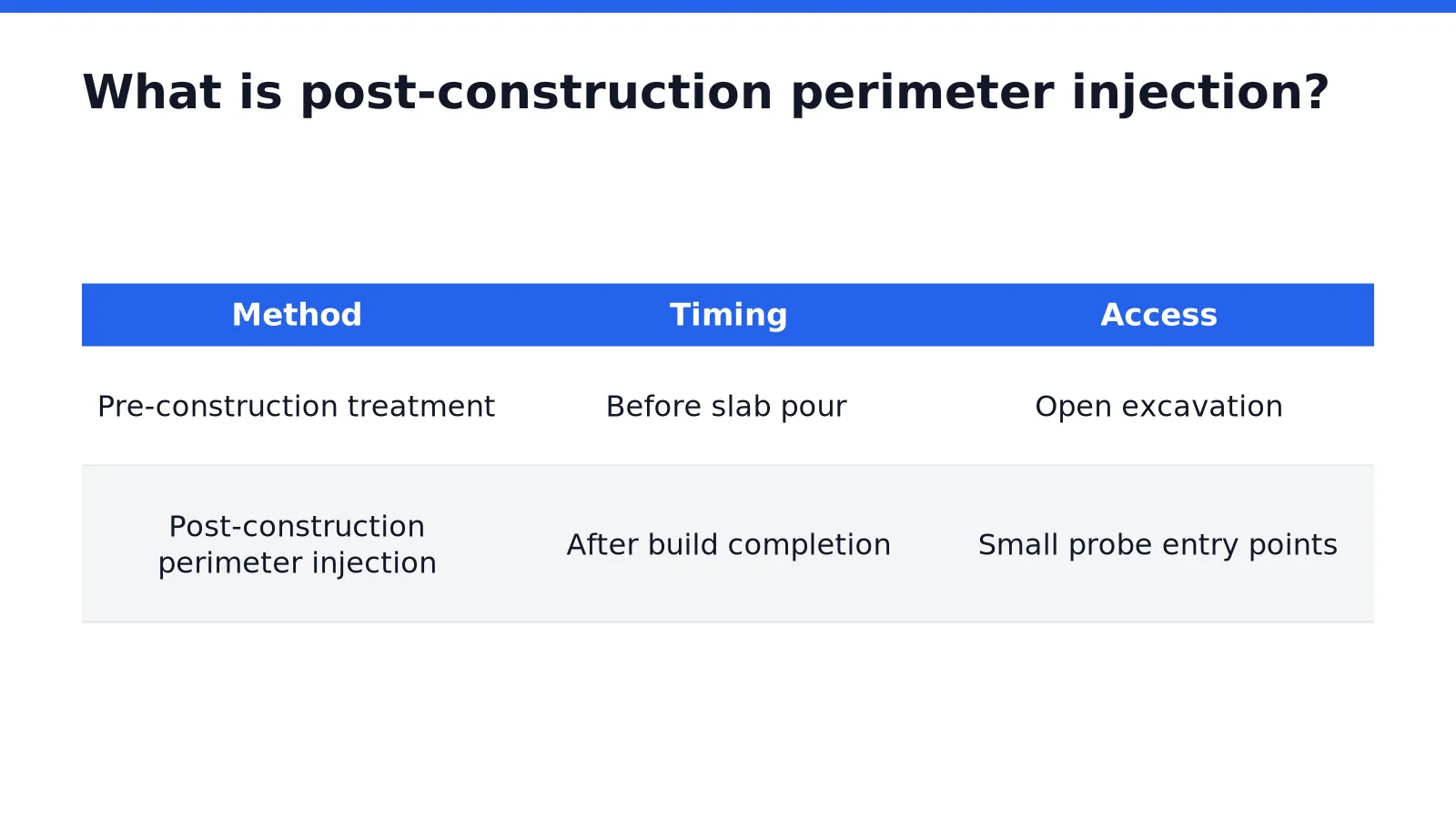
Post-construction perimeter injection is a non-invasive injection method that treats expansive clay soils around existing foundations. The process chemically stabilizes the ground without excavation, heavy machinery, or disruption to the structure above. TX ProChem applies this technique to fix foundation movement caused by the relentless swelling and shrinking of Texas clay.
How does the injection process work without damaging the property?
The perimeter hand injection method uses small-diameter probes inserted at targeted points around the foundation. Technicians inject a proprietary ionic liquid stabilizer directly into the soil at depth. The treatment alters the clay’s molecular polarity, permanently preventing it from absorbing water. No trenching occurs. No landscaping gets torn out.
TX ProChem secures the clay deep underground without disturbing flowerbeds, hardscaping, or existing yard features. The work remains entirely outside the home. Occupants stay inside. Daily routines continue uninterrupted.
Is this the same as retrofit soil stabilization?
Yes. Retrofit soil stabilization describes any treatment applied to soil beneath an already-built structure. Post-construction soil injection falls squarely in this category. Unlike pre-construction methods that require open excavation before a slab is poured, this approach addresses active foundation movement years after the build. The goal remains identical: stop the clay from moving. The difference lies in the access method. Hand injection reaches the problem soil through minimal surface entry points rather than by digging it all up.
TX ProChem brings over 30 years of experience to every retrofit project. The company’s ionic soil stabilization services target the root cause of shifting foundations rather than masking symptoms. A permanent fix replaces the cycle of temporary repairs.
How does perimeter hand injection work?
Perimeter hand injection delivers the ProChem Ionic Liquid Stabilizer directly into expansive clay beneath an existing foundation. The process targets the soil’s molecular structure rather than excavating or disturbing the slab above.
The treatment works through a precise chemical mechanism. The ProChem Ionic Liquid Stabilizer alters the polarity of clay soil by removing its negative charge. Electron microscopy verified this change during the University of Texas at Arlington study. Once the negative charge is removed, the clay becomes physically incapable of absorbing excess water. The swelling and shrinking cycle stops.
What happens to the soil after injection?
The molecular change is permanent. Treated ground remains consistent regardless of weather conditions. Drought no longer causes shrinkage. Heavy rain no longer triggers expansion. The foundation sits on stable material year-round.
Why choose injection over excavation?
Retrofit soil stabilization through injection avoids the disruption of digging up a foundation. The non-invasive injection method preserves landscaping, driveways, and interior finishes. Crews work around the existing structure without heavy demolition.
The process follows a straightforward sequence:
- Technicians assess soil conditions around the foundation perimeter.
- Injection points are placed at calculated intervals.
- The ionic liquid stabilizer is injected into the clay layer.
- The soil’s polarity shifts, locking the ground in place.
This approach addresses foundation movement at its source. Property owners avoid the recurring cost of cosmetic repairs that never solve the underlying problem. The University of Texas at Arlington study confirmed the stabilizer’s effectiveness through independent scientific evaluation.
Is post-injection soil testing necessary?
Post-injection soil testing is not optional. It is the only way to confirm that a post-construction soil injection actually altered the soil’s behavior as designed. Without verification, a property owner cannot know whether the treatment strengthened the ground or merely soaked it.
Skipping this step leaves a structure vulnerable to undetected soil movement. The comparison is direct: building without post-injection testing is like constructing a house without confirming the ground is solid. A foundation can look stable while the clay beneath continues its swell-and-shrink cycle.
What does post-injection testing actually verify?
Testing after injection confirms three specific outcomes:
- The soil was strengthened to the specified standard
- Moisture behavior is controlled and no longer reactive
- The structure sits on a stable base that resists seasonal movement
TX ProChem treats proof as a core deliverable, not a promise. The company’s process includes verification that the stabilizer performed as specified. For clients working with geotechnical professionals, TX ProChem builds custom injection plans from soil reports and then validates the results.
Can a foundation still move after injection?
Yes, if the treatment was incomplete or the soil was not fully penetrated. That is why perimeter hand injection and retrofit soil stabilization require follow-up testing. A non-invasive injection method reduces disruption, but only post-treatment data proves the clay stopped absorbing water.
Property owners who skip verification carry the risk of undetected failure. The cost of re-testing is small compared to repairing a foundation that shifts after the crew leaves.
Can I fix foundation movement without digging?
Yes. Retrofit soil stabilization through non-invasive injection secures expansive clay without excavation. TX ProChem treats the soil beneath existing structures while leaving the surface undisturbed.
The company’s hand-injection process is remarkably clean. Technicians secure the clay deep underground without disrupting flowerbeds, hardscaping, or the existing yard. Homeowners keep their landscaping intact while the foundation regains stability.
Post-construction soil injection targets the root cause of foundation damage, not just the symptoms. TX ProChem injects the ProChem Ionic Liquid Stabilizer directly into expansive clay. The treatment permanently changes how the soil responds to moisture.
How does perimeter hand injection work?
Perimeter hand injection places the stabilizer at precise depths around the foundation. The process requires no trenching or heavy excavation. Crews work from the surface, delivering treatment through small access points.
This method suits occupied homes and finished landscapes. The work proceeds without tearing out established plantings or paved surfaces.
What makes non-invasive injection different from traditional repair?
Traditional foundation repair often involves digging, piers, or slab removal. Non-invasive injection avoids all of that disruption. The treatment alters soil behavior at the molecular level instead of bracing against movement.
TX ProChem brings more than 30 years of hands-on experience across Texas, Louisiana, Mississippi, Arizona, and Oklahoma. The company operates as a family-owned specialist, not a national chain. That local expertise matters when diagnosing Texas clay conditions.
The result is a permanent fix for foundation movement without the mess of excavation.
Conclusion
Post-construction perimeter injection eliminates foundation movement without excavation, but only post-injection testing confirms the soil actually stopped reacting to moisture. Property owners who skip verification gamble on undetected failure. The decision comes down to whether a permanent fix requires proof or just a promise.