
Expansive clay soil threatens Texas pools and decks with cracking and shifting. TX ProChem chemically stabilizes surrounding soil before excavation, preventing catastrophic damage to custom gunite shells. The company has delivered permanent, science-backed fixes for residential builds for decades. Treating pool floors and decking areas reduces movement from volatile Texas clay.
Why does Texas clay threaten your pool?
Expansive clay soils across Texas create a relentless cycle of swelling and shrinking that directly threatens pool structures. More than 90% of the DFW area and most of North Texas contain soil profiles high in clay content, according to SWIMSOIL. This volatile ground movement cracks pool shells, shifts decking, and damages underground plumbing.
The mechanism is straightforward. Clay absorbs water during wet seasons and expands with tremendous force. During dry spells, the same clay contracts and shrinks, leaving voids beneath structures. Large ground cracks appear and disappear as moisture levels change, signaling the constant instability below the surface.
How does clay movement damage a pool?
The damage unfolds in predictable but costly ways. Shifting soil exerts uneven pressure on pool walls and floors. This leads to four primary failures:
- Pool deck cracks that spread across concrete surfaces
- Uneven settling of the pool shell, throwing off waterlines
- Plumbing damage from pipes bending under soil stress
- Structural instability that compromises the entire installation
A single season of heavy rain followed by drought shifts the earth enough to crack a custom gunite shell. Homeowners who delay addressing soil conditions risk repair costs that far exceed prevention.
What makes Texas soil different from other regions?
Texas clay, particularly in the Dallas-Fort Worth area, ranks among the most expansive in the country. The soil’s high plasticity index means it responds dramatically to even minor moisture changes. Builders working without pool soil stabilization face a near-certainty of future structural problems. Pool contractor soil protection methods that ignore the clay’s behavior leave every part of the installation vulnerable.
TX ProChem addresses this threat at the molecular level. The company’s ionic liquid treatment alters the soil’s polarity, rendering it incapable of absorbing excess water. This approach locks the ground in place permanently, eliminating the shrink-swell cycle that destroys pools. For builders seeking to prevent pool heave, the treatment integrates directly into the construction sequence.
Concrete perimeter stabilization secures the decking and surrounding hardscape. Without it, even a structurally sound pool shell sits inside a shifting frame. Pool slab protection extends the treatment beneath the pool floor, creating a unified stable zone that resists seasonal changes year after year.
How does pool soil stabilization work?
Pool soil stabilization chemically alters expansive clay beneath and around a swimming pool, permanently preventing the soil from absorbing water. This process stops the destructive shrink-swell cycle that cracks pool shells and decking across Texas.
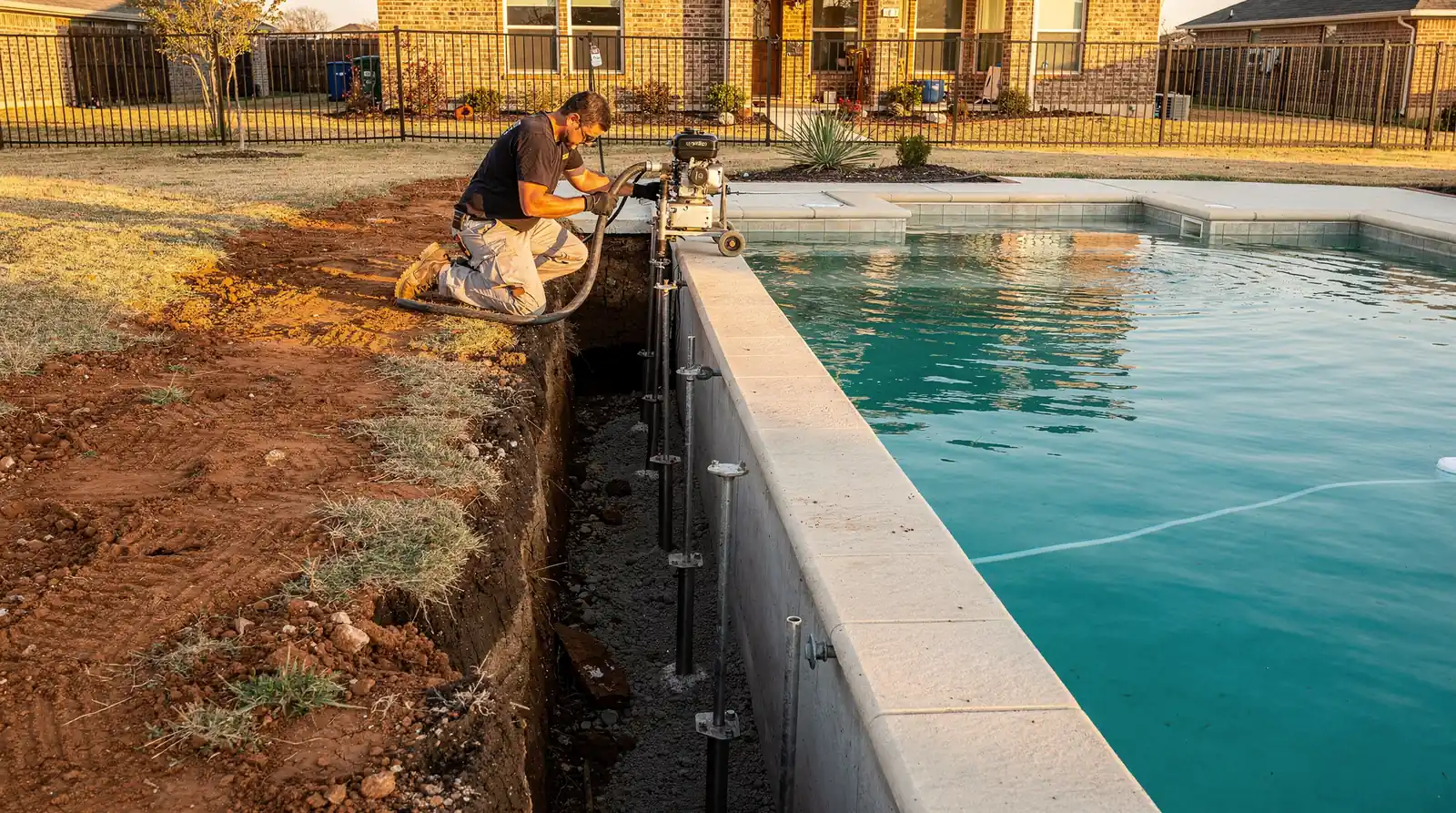
The treatment targets both the pool floor and the surrounding decking areas. Chemical injections reduce movement caused by expansive clay soils, which dominate the Texas landscape. For new pool construction, crews inject the stabilizer before excavation begins, ensuring the treated soil directly supports the pool structure from day one.
What does the chemical treatment actually do to the soil?
TX ProChem applies a proprietary ionic liquid treatment that alters the polarity of the soil surrounding the pool. The treated ground becomes physically incapable of absorbing excess water. This molecular change is permanent and irreversible.
The company pioneered the ProChem Ionic Liquid Stabilizer, a patented solution validated through a two-year study conducted by the University of Texas at Arlington. Unlike moisture-barrier methods that merely slow water infiltration, this approach eliminates the swelling mechanism entirely. Expansive clay loses its ability to heave when moisture levels change.
How does the injection process protect the pool perimeter?
Concrete perimeter stabilization depends on treating soil beyond the pool shell itself. Injections extend into the decking footprint, creating a unified zone of stable ground. This comprehensive coverage prevents differential movement between the pool structure and its surrounding hardscape.
Pool slab protection follows the same principle. The stabilizer locks the soil matrix beneath the slab, eliminating the expansion pressure that lifts and cracks concrete. Builders who incorporate this step before pouring avoid callbacks for heaving decks and separated coping joints. The treatment integrates directly into the construction sequence without delaying the project schedule.
Pool contractor soil protection strategies that skip chemical stabilization leave installations vulnerable to Texas clay. A single drought season followed by heavy rain generates enough ground movement to cause structural failure unless pool heave is prevented. TX ProChem’s ionic liquid stabilizer addresses this risk at the molecular level before the first yard of concrete is poured.
Can stabilization prevent pool heave and deck cracks?
Yes. Pool soil stabilization directly prevents pool heave and deck cracks by reducing the movement caused by expansive clay soils common throughout Texas. Stabilizing the soil beneath and around a pool addresses the root cause of structural damage before it appears.
Expansive clay expands when wet and contracts when dry. This constant cycle pushes against pool shells and concrete decks. The pressure causes cracks, leaks, and uneven settling. TX ProChem neutralizes expansive clay at the molecular level. The company’s ionic liquid treatment stops the endless cycle of swelling and shrinking for good.
How does soil stabilization protect a pool shell?
The treatment alters the soil’s behavior permanently. TX ProChem employs a permanent stabilization approach that keeps the ground consistent irrespective of weather conditions. A stable soil mass cannot heave upward during wet seasons. It cannot shrink away from the pool shell during drought.
What happens without stabilization?
Untreated clay soil shifts with every moisture change. Pool decks crack. Coping separates from the shell. Plumbing lines shear. Addressing soil risks before construction prevents costly repairs and ensures a long-lasting, stable pool.
Pool contractor soil protection works best when applied before excavation. The treatment integrates with the build sequence. Contractors avoid callbacks for cracked decks and shifted shells. Homeowners avoid repair bills that follow the first heavy rain or extended dry spell.
Concrete perimeter stabilization locks the soil beneath walkways and decking. Pool slab protection extends the same treatment under the pool floor. Both applications work together to prevent pool heave across the entire installation.
The result is a pool that stays level through Texas weather extremes. No shifting. No cracking. No expensive remediation.
What does concrete perimeter stabilization involve?
Concrete perimeter stabilization treats the soil beneath every hard surface surrounding a Texas pool. TX ProChem stabilizes the ground under decks, waterfalls, and hardscaping, not just the pool shell itself. The treatment locks expansive clay in place so the entire backyard remains level for decades.
The process targets the full structural footprint. Beyond the pool shell, the company stabilizes the soil beneath surrounding decks, waterfalls, and other concrete perimeter features. This approach ensures the entire backyard oasis remains pristine and perfectly leveled.
How does the treatment fit into the construction schedule?
TX ProChem crews arrive before excavation begins. They treat the designated footprint and leave the site ready for the dig team with zero delays. The workflow integrates directly alongside the existing build sequence.
What does pool soil stabilization cost compared to foundation work?
Pool injections are typically more labor-intensive than standard foundation injections. However, the overall project size is much smaller. Even though the cost per square foot may be higher, the total investment for stabilizing a swimming pool area is usually quite reasonable.
Pool slab protection and concrete perimeter stabilization work together as one treatment zone. The following comparison shows how pool projects differ from foundation work:
Pool contractor soil protection benefits from this sequencing. Builders receive a treated site ready for excavation, which helps prevent pool heave before the first yard of dirt moves. The treatment alters soil polarity at the molecular level, rendering the clay physically incapable of absorbing excess water. Texas homeowners and builders avoid the costly repairs that follow untreated expansive clay.
Is pool slab protection worth the investment?
Pool slab protection is a critical investment for any Texas pool project. Shifting clay soils cause cracks, leaks, and structural failure without proper stabilization. The cost of repairing a cracked gunite shell or a heaved concrete deck far exceeds the upfront expense of treating the soil before excavation begins.
Pool soil stabilization addresses the root cause of these failures. Expansive clay swells when wet and shrinks during drought, creating constant underground movement. This pressure transfers directly to the pool shell and surrounding flatwork. A chemically stabilized soil mass remains volumetrically consistent regardless of moisture changes, eliminating the force that damages concrete.
How does soil treatment prevent pool heave?
Prevent pool heave by neutralizing the clay’s ability to absorb water. The ionic liquid treatment alters soil polarity at the molecular level. Treated ground cannot expand, so the pool slab stays put. This permanent solution works for both new construction and existing pools showing early distress.
What does concrete perimeter stabilization cost compared to repairs?
Concrete perimeter stabilization costs less than a single major deck replacement. Pool decks in North Texas routinely crack within the first two years on untreated soil. Stabilizing the perimeter during construction locks the deck substrate in place. The total investment remains reasonable because the treated area around a pool is relatively small, even though the per-square-foot labor is higher than standard foundation work.
Pool contractor soil protection integrates directly into the build sequence. TX ProChem crews treat the site before excavation, working alongside the pool builder’s schedule. The company brings over 30 years of hands-on experience across Texas and carries full insurance and licensing. Every proposal is transparent and built around actual budgets and timelines. The treatment process handles up to 6,000 square feet per day per tractor, keeping large residential projects on schedule. A high client satisfaction rate reflects the reliability of this approach. Pool slab protection eliminates the gamble that Texas clay will stay dormant under a six-figure pool installation.
Conclusion
For Texas homeowners and builders, the decision to stabilize the soil beneath a pool and its surrounding concrete is a direct investment in the structure’s longevity. Treating the ground before excavation removes the risk of heave and cracking that plagues untreated clay. This single step protects the pool shell and deck from the state’s relentless weather cycles, ensuring the installation remains level and intact. Choosing this permanent solution at the outset eliminates the gamble of costly, avoidable repairs later.