
Mass site soil injection from TX ProChem treats expansive clay across entire commercial developments before construction begins. The patented ProChem Ionic Liquid Stabilizer alters soil behavior at the molecular level, preventing foundation damage from shifting clay. Mass soil treatment handles up to 6,000 square feet daily per tractor, keeping project schedules on track.
Why does Texas clay threaten commercial developments?
Expansive clay soil damages Texas commercial buildings more than floods, tornadoes, and earthquakes combined. TX ProChem stops this threat at its source through molecular-level soil treatment applied before construction begins.
The danger lies in the soil’s volatility. A single season of heavy rain or extreme drought shifts the earth enough to crack foundations, slab-on-grade floors, and underground utilities. For commercial general contractors and land developers, this movement introduces unacceptable pv risk mitigation challenges. Potential Vertical Rise (PVR) threatens project timelines, budgets, and long-term structural integrity.
How does expansive clay behave under commercial loads?
Expansive clay swells when wet and shrinks when dry. This cycle exerts tremendous pressure on building foundations. Commercial structures with large footprints face uneven movement across the slab, creating stress fractures and serviceability failures. Traditional over-excavation and moisture conditioning methods add weeks to schedules without guaranteeing results.
TX ProChem addresses the root cause through pre-construction injection of its patented ionic liquid stabilizer. A two-year study conducted by the University of Texas at Arlington validated the technology’s effectiveness. The treatment alters soil polarity at the molecular level, rendering clay particles incapable of absorbing excess water.
What makes mass soil treatment the right approach for large sites?
Mass soil treatment delivers permanent stabilization across entire commercial pads and subdivision lots. The company’s mass tractor soil stabilization equipment treats up to 6,000 square feet per day per tractor. This capacity helps developers site readiness accelerate without disrupting construction sequencing.
The process integrates directly into existing earthwork workflows. Crews inject the stabilizer directly into expansive clay soil. For developers managing tight schedules, this approach prevents weather delays from derailing project milestones. The stabilized ground remains consistent regardless of rainfall or drought conditions, protecting the investment long after the certificate of occupancy is issued.
TX ProChem’s molecular approach to foundation stability replaces reactive repairs with proactive prevention. Commercial developers gain certainty that subsurface conditions will not compromise their structures over time.
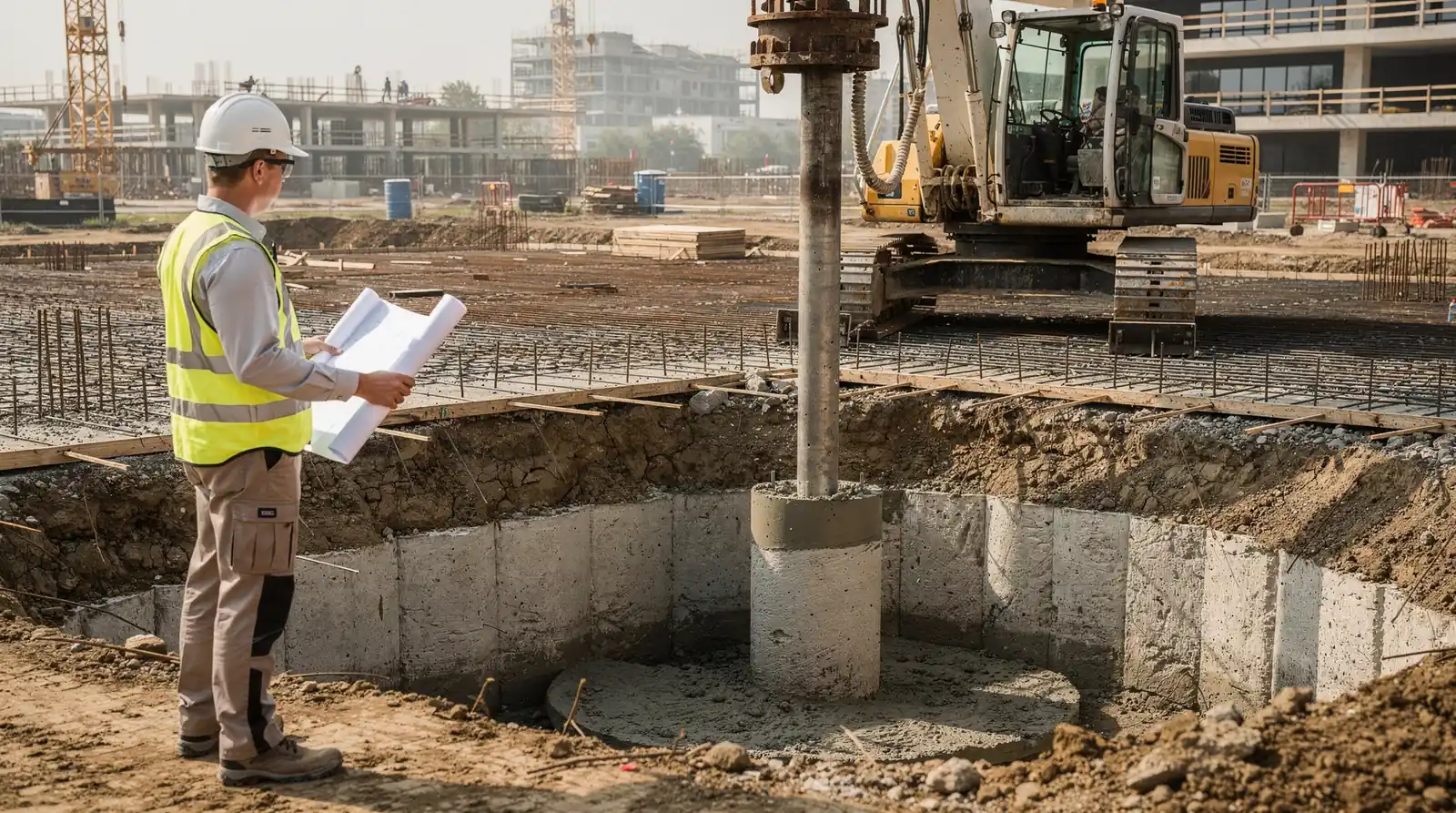
How does mass soil treatment prevent foundation failure?
Mass soil treatment prevents foundation failure by permanently altering expansive clay at the molecular level. The process strips negative electrical charges from clay particles, eliminating their ability to absorb water and swell.
Foundation damage across Texas costs developers millions in callbacks and structural repairs. Expansive clay soils shrink during drought and heave after rain, creating a relentless cycle that cracks slabs and shifts footings. Traditional mitigation methods like over-excavation or lime treatment add weeks to project schedules without guaranteeing long-term stability.
TX ProChem’s approach targets the root cause. A University of Texas at Arlington study verified through electron microscopy that the ProChemical Soil Stabilizer changes clay polarity by removing its negative charge. This ionic alteration renders the soil physically incapable of absorbing excess moisture. The same study documented a measurable reduction in the Plasticity Index of treated expansive soils, confirming that the treatment permanently suppresses the shrink-swell behavior responsible for foundation distress.
What does the University of Texas study confirm about ionic stabilization?
The study confirmed two critical outcomes. Electron microscopy verified that the treatment strips negative charges from clay particles, fundamentally changing their polarity. Researchers also measured a reduction in the Plasticity Index, the key metric engineers use to predict soil movement. Lower PI values mean less volumetric change under varying moisture conditions.
How fast can mass soil treatment cover a commercial site?
Speed matters when construction deadlines are tight. TX ProChem’s mass tractor soil stabilization equipment treats up to 6,000 square feet per day per tractor. This throughput keeps site preparation on schedule without the delays common to remove-and-replace methods. For subdivision developers and commercial contractors, that production rate translates directly into earlier pad readiness and faster vertical construction starts.
Pre-construction injection integrates seamlessly into existing earthwork sequences. Crews apply the ionic liquid stabilizer before footings are poured, locking the subgrade in place from day one. This site readiness accelerate strategy eliminates weather-related downtime because treated ground no longer responds to rain or drought. PV risk mitigation becomes a documented site condition rather than an ongoing liability. Developers who build on solid ground with ProChemical soil stabilization hand over properties with foundations that stay put regardless of seasonal moisture swings.
Can pre-construction injection accelerate site readiness?
Pre-construction injection directly accelerates site readiness by eliminating the delays associated with expansive clay soil. TX ProChem treats the designated building footprint before excavation begins, handing the site back to the dig team with zero schedule disruption.
How does the injection process fit into existing construction timelines?
The company’s crews arrive before excavation, apply the ionic liquid treatment, and clear the site for immediate digging. This sequence integrates smoothly with established construction plans. Project schedules remain uninterrupted because the treatment targets the root cause of soil instability at the molecular level. No waiting period follows the application.
What makes this approach faster than traditional soil remediation?
Traditional methods like over-excavation and select fill replacement consume days or weeks of a project timeline. Mass soil treatment with a tractor-mounted injection system covers up to 6,000 square feet per day. A single tractor treats large commercial pads and entire subdivision blocks without the haul-off and import cycles that bog down conventional earthwork. The result is a site readiness accelerate workflow that keeps mass grading and foundation crews moving without pause.
Pre-construction injection also eliminates weather-related downtime. The permanent stabilization approach keeps the ground consistent irrespective of weather conditions. Rain does not swell the treated clay. Drought does not shrink it. Contractors avoid the costly cycle of reworking subgrade after every storm.
For developers managing pv risk mitigation on large-scale projects, this speed translates directly to carrying cost savings. Every day a site sits idle while soil conditions are corrected represents unrecovered overhead. Mass tractor soil stabilization removes that variable entirely. The treated soil gains permanent resistance to moisture-driven volume change, which means foundations proceed on schedule and structures avoid the long-term damage that expansive clay causes across Texas.
TX ProChem’s commercial soil stabilization services apply this same accelerated approach to warehouses, data centers, and industrial facilities. The injection process requires no excavation, no imported fill, and no business interruption. Site readiness becomes a predictable milestone rather than a weather-dependent gamble.
How does mass tractor soil stabilization reduce PVR risk?
Mass tractor soil stabilization eliminates Potential Vertical Rise (PVR) risk by permanently altering expansive clay at the molecular level. TX ProChem injects a proprietary ionic liquid stabilizer directly into the soil, stopping the destructive swell-shrink cycle that causes foundations to heave and crack.
PVR measures how much clay soil lifts a structure over time. Uncontrolled PVR threatens project schedules, budgets, and structural integrity. The company’s pre-construction injection process neutralizes this threat before concrete is poured.
How does the ionic treatment stop clay from swelling?
The treatment changes the soil’s polarity. Expansive clay particles carry a negative charge that attracts water molecules, causing swelling during wet seasons and shrinkage during drought. TX ProChem’s ionic liquid permanently alters this electrochemical bond. The treated soil becomes physically incapable of absorbing excess moisture. The endless cycle of swelling and shrinking stops for good.
What makes tractor-based application effective for large sites?
Speed and coverage define the tractor-based approach. A single tractor treats up to 6,000 square feet per day, making mass soil treatment practical for entire subdivisions and commercial pads. The equipment injects stabilizer at precise depths across broad areas without excavation. This site readiness accelerate capability keeps earthwork and foundation schedules on track.
The process addresses the root cause of foundation damage rather than masking symptoms. For commercial general contractors and land developers, PVR risk mitigation at this scale transforms site preparation from a gamble on soil behavior into a controlled, engineered outcome. A private industrial development in Corsicana demonstrated this at scale, where 431,000 square feet of expansive clay received treatment for a liquid asphalt plant and railyard.
When should developers schedule soil stabilization?
Treatment fits directly into the existing build sequence. Crews arrive before excavation begins, apply the stabilizer, and clear the site for the next trade. No curing delays interrupt the schedule. The soil remains stable regardless of rainfall or drought conditions that follow.
What makes TX ProChem the right partner for your project?
TX ProChem brings over 30 years of hands-on soil stabilization experience to commercial and residential projects across Texas and four neighboring states. The company operates as a family-owned business, not a national franchise, which means decision-making stays local and responsive to site-specific challenges.
Mass soil treatment demands specialized equipment and crews who understand expansive clay behavior at scale. TX ProChem deploys 50 trained employees to execute pre-construction injection programs that integrate directly into existing build sequences. Every proposal reflects actual client budgets and timelines. No generic packages. No hidden contingencies.
How does TX ProChem accelerate site readiness for large developments?
The company’s mass tractor soil stabilization approach treats up to 6,000 square feet per day per tractor. This throughput keeps earthwork and foundation schedules on track without introducing delays between grading and slab placement. Site readiness accelerate strategies depend on predictable soil behavior, and TX ProChem’s ionic liquid treatment locks expansive clay in place permanently.
What risk mitigation does TX ProChem provide for expansive clay sites?
PV risk mitigation starts with a custom injection plan built from the project’s geotechnical report. TX ProChem partners with geotechnical and structural engineers to translate soil data into precise treatment zones. The company carries full insurance and licensing, backed by three decades of documented results. Developers avoid the costly cycle of post-construction foundation repairs that plague untreated expansive clay sites.
The company’s transparent workflow eliminates guesswork. Crews arrive before excavation, inject the stabilizer at specified depths, and clear the site for the next trade. No excavation required. No business interruption. Just permanently stable subgrade ready for construction loads.
Conclusion
For developers managing large commercial pads or subdivision blocks, the decision to schedule pre-construction soil stabilization removes the single largest variable from site preparation. Expansive clay stops behaving like a weather-dependent liability and becomes a controlled, engineered substrate. The result is a predictable construction window, no rework after storms, and a foundation that never suffers the swell-shrink cycle. That certainty transforms project economics from the ground up.