
Shifting clay soil does more damage to Texas homes and buildings than floods, tornadoes, and earthquakes put together. We stop it at the source.
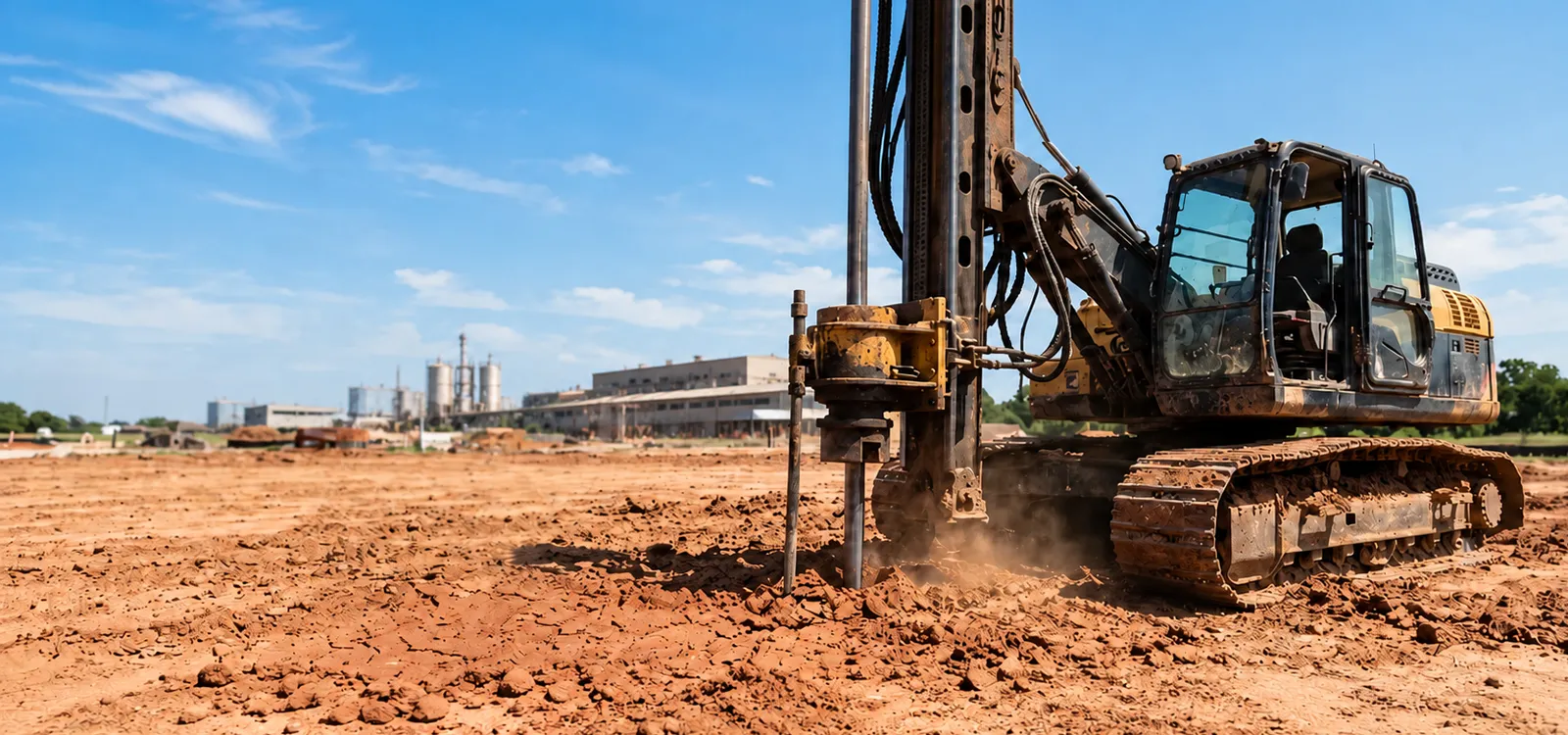
TX ProChem delivered soil stabilization solutions that ensured a strong foundation and on-time
completion for this private industrial development.
Project Overview: For this development in, TX ProChem was contracted to stabilize the existing
expansive clay soils prior to foundation construction of a liquid asphalt plant and connected railyard.
The project required a fast-track approach while meeting strict engineering specifications and
maintaining the overall construction schedule.
Industrial Development
431,000 Sq. Ft.
Expansive Clay
Expansive Clay
85 Days
Passed All Density & PVR Tests
July 2026
• Soil Stabilization
• Documentation
• QA Testing (by GeoTechnical Engineer)
Project Challenge:
• The site required subgrade improvements of the structures that comprise the Amenity
Center, including but not limited to the pool, clubhouse, locker rooms and pickleball court.
• The GeoTechnical Engineer established soil guidelines; Pressure/Sq In (PSI), Plasticity Index
(PI) and Liquid Limit (LL) requirements, that had to be strictly adhered to.
• The site was comprised highly expansive clay soils with a high shrink and swell potential.
• The poor soil conditions posed a risk of subgrade failure and structural integrity; which could
result in costly repairs without stabilization.
• The Developer needed a solution that ensured long-term soil and foundation stability.
TX ProChem implemented a comprehensive soil stabilization program using ionic chemical
stabilization technology.
Our team executed the work efficiently with strict quality control and testing at every stage.
Work Included:
• Ionic chemical injected into existing soils to improve structural integrity and reduce heave
and shrink
• Swell testing by GeoTechnical engineer to ensure all GeoTechnical requirements were met,
including but not limited to Potential Vertical Rise (PVR) measures.
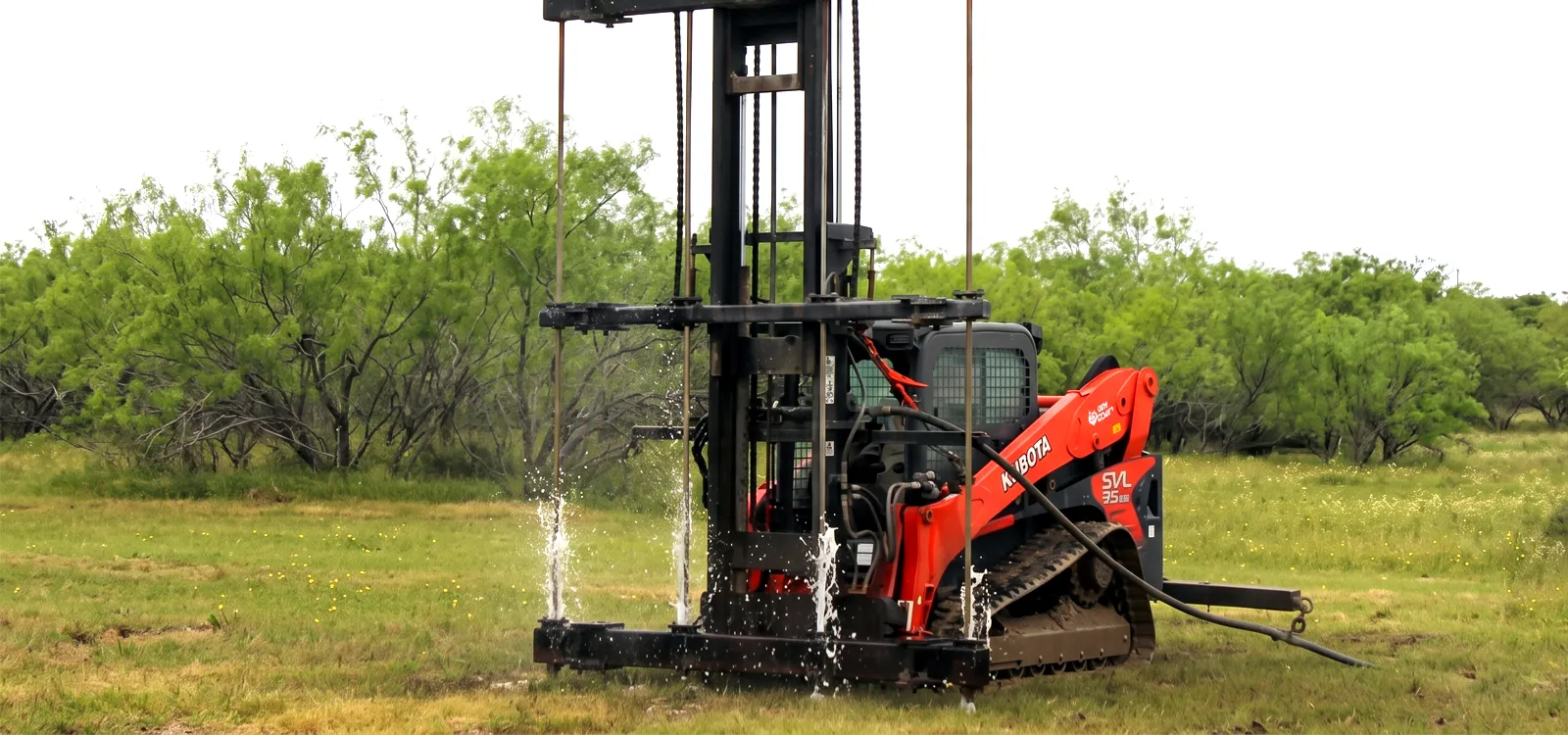
TX ProChem delivered soil stabilization solutions that ensured a strong foundation and on-time
opening for this neighborhood Amenity Center, including pool and decking, clubhouse, and pickleball
court.
Project Overview: For this development in, TX ProChem was contracted to stabilize the existing
expansive clay soils prior to foundation construction of all the areas in the large Amenity Center for a
large residential complex.
The project required meeting strict engineering specifications (12’ injection and 1% swell) and
maintaining the overall construction schedule.
Amenity Center
27,000 Sq. Ft.
Expansive Clay
Chemical Stabilization
10 Days
Passed All Swell & PVR Tests
August 2026
• Soil Stabilization
• Documentation
• QA Testing (by GeoTechnical Engineer)
Project Challenge:
• The site required subgrade improvements of the structures that comprise the Amenity
Center, including but not limited to the pool, clubhouse, locker rooms and pickleball court.
• The GeoTechnical Engineer established soil guidelines; Pressure/Sq In (PSI), Plasticity Index
(PI) and Liquid Limit (LL) requirements, that had to be strictly adhered to.
• The site was comprised highly expansive clay soils with a high shrink and swell potential.
• The poor soil conditions posed a risk of subgrade failure and structural integrity; which could
result in costly repairs without stabilization.
• The Developer needed a solution that ensured long-term soil and foundation stability.
TX ProChem implemented a comprehensive soil stabilization program using ionic chemical
stabilization technology.
Our team executed the work efficiently with strict quality control and testing at every stage.
Work Included:
• Ionic chemical injected into existing soils to improve structural integrity and reduce heave
and shrink
• Swell testing by GeoTechnical engineer to ensure all GeoTechnical requirements were met,
including but not limited to Potential Vertical Rise (PVR) measures.
Soil stabilization is the process of treating unstable or expansive soil to improve its load-bearing capacity and reduce movement. In Texas, clay soil is the main culprit. It expands when it gets wet and contracts when it dries, putting constant pressure on whatever sits on top of it, including your foundation. Left untreated, that movement leads to cracks, settling, and expensive structural repairs.
Moisture conditioning and select fill are temporary fixes. They add water or replace soil at the surface but do not change how the clay actually behaves. Our ProChem Ionic Liquid Stabilizer permanently alters the clay at a molecular level so it can no longer absorb and release water the same way. The result is a soil that stays consistent year-round, regardless of rainfall or drought.
Our equipment treats up to 6,000 square feet per day per tractor. Most residential lots are completed in a day or two. Larger commercial or subdivision projects are scheduled in phases to match your overall construction timeline.
Yes. Because our stabilizer changes the electrochemical structure of the clay, the effect does not wear off over time. You are not buying yourself a few years of stability. You are permanently changing how the soil behaves.
Yes. Our post-construction hand injection technique lets us treat the soil around the perimeter of an existing structure without demolition or interior access. The scope of treatment is determined using the geotechnical engineer's findings. Once the work is complete, the independent GEO testing company performs the post-injection testing and issues results directly to you.